A review published in Transplant International on 15 October 2026 examines the logistics needed to bring clinical xenotransplantation into wider use. Konrad Fischer, Joachim Denner, Ralf Reinhard Tönjes, Philipp Felgendreff and Axel Rahmel connect donor pig production with biosafety, organ retrieval, machine perfusion and distribution. Their central message is that organ availability must be supported by a reliable system for maintaining organ quality and delivering it to the recipient.
At BHOC Transplant, we agree with the authors. Organ retrieval, support, transport, implantation and recovery should be managed as a connected process, with the aim of limiting ischemia and injury associated with reperfusion.
Why controlled oxygenation matters to us
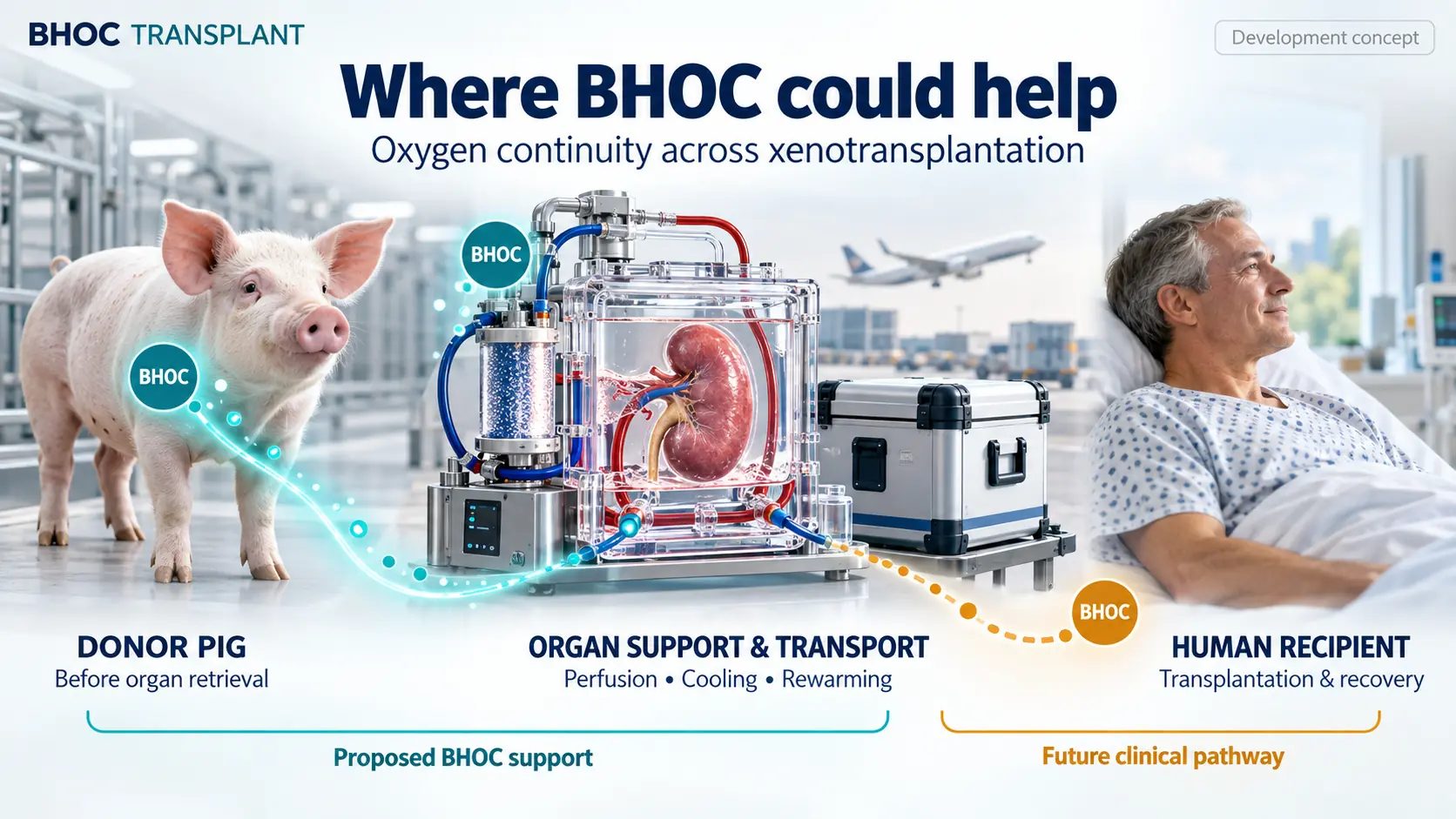
Our development concept for BHOC, Biological Hemoglobin Oxygen Carrier, follows oxygen delivery before, during and after transplantation. We believe that matching oxygen availability to the organ's changing metabolic demand could support tissue function throughout this journey.
Temperature is central to this approach. Our proposed use spans cold organ support, controlled rewarming and physiological temperatures. The objective is to manage oxygen delivery across this broad temperature range through defined carrier concentration, flow, oxygen input and temperature, while measuring the organ's response. This is the direction we are developing within Precision Oxygen Therapeutics.
From the donor animal to the recipient
The cross-species concept is particularly relevant to xenotransplantation. It connects potential oxygen support in a living donor pig, in the isolated organ and, through a further clinical development pathway, in the human recipient.
- Before retrieval: investigate donor-side oxygen support in pigs, with the aim of protecting organ function before procurement.
- During organ support and transport: investigate controlled oxygenation through retrieval, cooling, ex vivo perfusion, delivery and rewarming.
- During and after transplantation: develop recipient-side oxygen-support protocols aimed at early graft function and recovery.
The first practical direction is to investigate support in donor pigs and follow the organ through retrieval and ex vivo perfusion. The goal is to reduce ischemic exposure and reperfusion injury. Extending the same carrier approach into the human recipient, including the question of pre-implantation washout, is a further stage of development.
For us, the value of oxygen continuity is to protect the organ's function across every transition, from the living donor to recovery in the recipient.
Explore our transplant journey, transplant evidence and research collaboration opportunities.
Original publication
Fischer K, Denner J, Tönjes RR, Felgendreff P, Rahmel A. Logistics of clinical xenotransplantation: from donor pig production to global organ distribution. Transplant International. 2026;39. DOI: 10.3389/ti.2026.17326. The review is the source of the news; the BHOC development perspective is our interpretation.